|
The Oakland Reptiles!
1. LYDIA: California Kingsnake
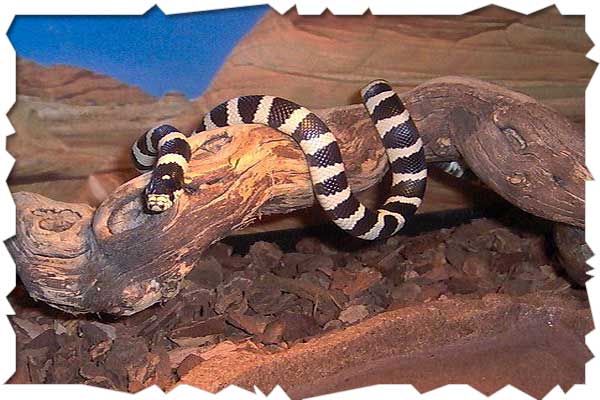 |
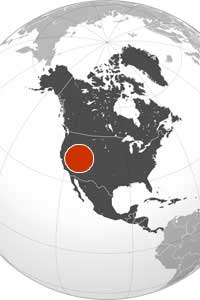
California Kingsnakes use constriction to kill their prey and they will eat other snakes, including venomous type. The "king" in the name (as the king cobra) references its taste for other snakes.
Diet: Carnivore (meat)
Size: 2 - 4 feet

|
|
| INCLUDED IN ALL SHOWS |
2. RUBY: Spiny-Tailed Monitor
 |
The Australian spiny-tailed monitor, a medium-sized monitor lizard, can attain a total length of up to 27 inches. They are diurnal, solitary ground-dwellers with a lower level of activity as to other monitor lizards. It is often found in its hideout at day, and it is a sit-and-wait-predator, preying mostly on insects
Diet: Omnivore (plants and insects)
Size: 12 to 24 inches
|
|
| INCLUDED IN ALL SHOWS |
3. Three-toed Box Turtle
 |
Box turtles are omnivorous. Their eagle eyes and keen sense of smell help them find foods such as snails, insects, berries, fungi, slugs, worms, flowers, fish, frogs, and eggs.
During their first five to six years of life they are primarily carnivorous. Adults tend to be mostly herbivores, but do not feed on leafy greens.
Diet: Omnivore (plants and insects)
Size: 5-7 inches
|
|
| INCLUDED IN ALL SHOWS |
4. RITA: Arizona Mountain Kingsnake
 |
Arizona mountain kingsnakes have a banded pattern that consists of a black, cream or yellow crossband. They have a similar pattern as the Coral snake, but the snakes are completely harmless. The majority of its range lies from the extreme northwestern corner of the state, across the central mountain ranges into the mountain ranges of the southeast.
Diet: Carnivore (meat)
Size: 18 - 36 inches
|
|
| INCLUDED IN ALL SHOWS |
5. LEO: Leopard Gecko
 |
The leopard gecko is a crepuscular ground-dwelling lizard naturally found in the deserts of Asia and India. Unlike most geckos, leopard geckos have movable eyelids and it has become a a very popular pet in captivity.
Diet: Insectivore (insects)
Size: 8- 10 inches
|
|
| INCLUDED IN ALL SHOWS |
6. BINDI: Ball Python
 |
Ball Python are a nonvenomous python species found in Africa. This is the smallest of the African pythons and curls into a ball when stressed or frightened.
Diet: Carnivore (meat)
Size: 30 inches
|
|
| INCLUDED IN ALL SHOWS |
7. CORN: Blue-Tongue Skink
 |
Blue-tongues are amazing survivors of urbanization. A skink
may stay in the same backyard for years, conveniently consuming
slugs and snails and sunning itself each morning. They have a reputation for stealing dog food.
Diet: Omnivore (plants and meat)
Size: 6-24 inches
|
|
| INCLUDED IN EXPEDITION |
8. RINGO: Red-Footed Tortoise
 |
Known in Brazil as Jabuti and Morrocoy in Venezuela, the Red-footed
Tortoise is popular as
a pet.
This species is protected and may not be exported from its home
country without a permit.
Diet: Omnivore (plants and meat)
Size: 12-18 inches
|
|
| INCLUDED IN EXPEDITION |
Source: Wikipedia
Reptiles in our programs are subject to substitution when necessary.
ABOUT THE REPTILES
We do not own any dangerous or venomous animals. Most of our reptiles are rescued animals that we adopted very much like pets.
Animals shown on our website are examples and may vary by event. Animal selections are subject to change based on welfare needs, handler availability, weather, transportation, and local regulations.

|